LASIT
Traceability
Laser marking technology is primarily used to ensure the traceability of industrial components, thanks to its versatility, high speed, and resistance to wear compared to other technologies.
Integration
Another advantage is easy integration into existing production lines, as well as the ability to connect laser systems with robots and equip them with vision systems for reading and verifying marked codes.
Aesthetics
Lasers can be used to mark or engrave complex geometries and logos with exceptional precision. A wide range of wavelengths and power levels enables the marking of almost any material with permanent, high-contrast marks.
Functional Marking
Laser marking technology can also be used to modify the physical properties of a material’s surface, achieving the desired result with exceptional process repeatability.
Metal is the material most commonly marked with lasers. The entire industrial supply chain largely consists of metal products, while many hydraulic and medical components are also made of metal. However, laser marking can also be used on plastics and wood.
One of the most common applications of laser marking is product traceability. This involves marking identification codes, most commonly QR and Data Matrix codes. LASIT laser markers, combined with the proprietary FlyCAD software, offer exceptional flexibility in code generation. The software is easy to use and enables automated data management, with direct integration into the customer’s MES and ERP systems.
LASIT laser markers can also be equipped with a vision system (camera) for verifying and assessing the quality of marked codes.
Within an individual production station, product traceability is ensured through a high level of automation and expertise.
This marking method is known as DPM (Direct Part Marking), meaning that the identification is applied directly to the component without the use of labels, plates, or other additional information carriers.
Standard Machines
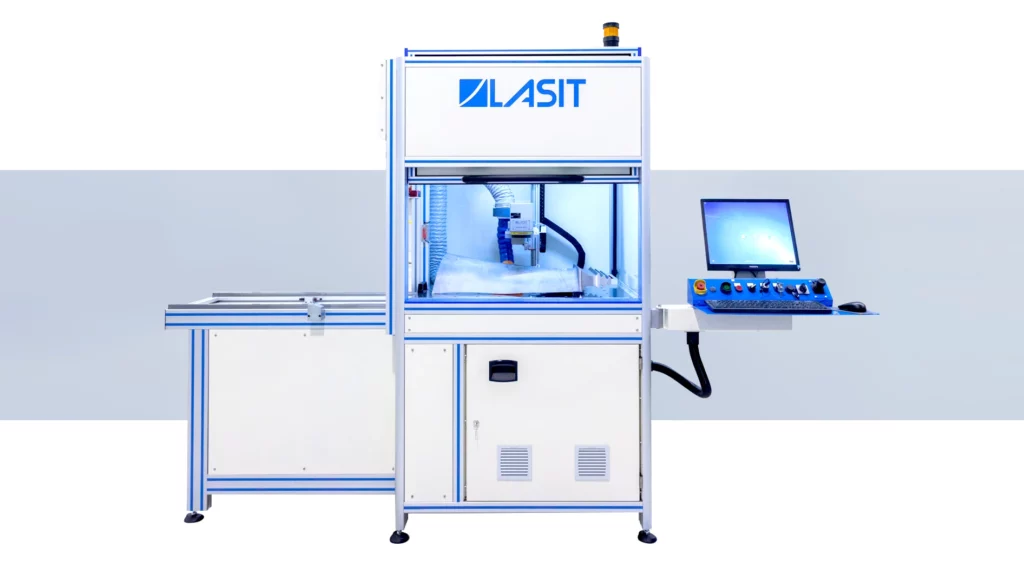
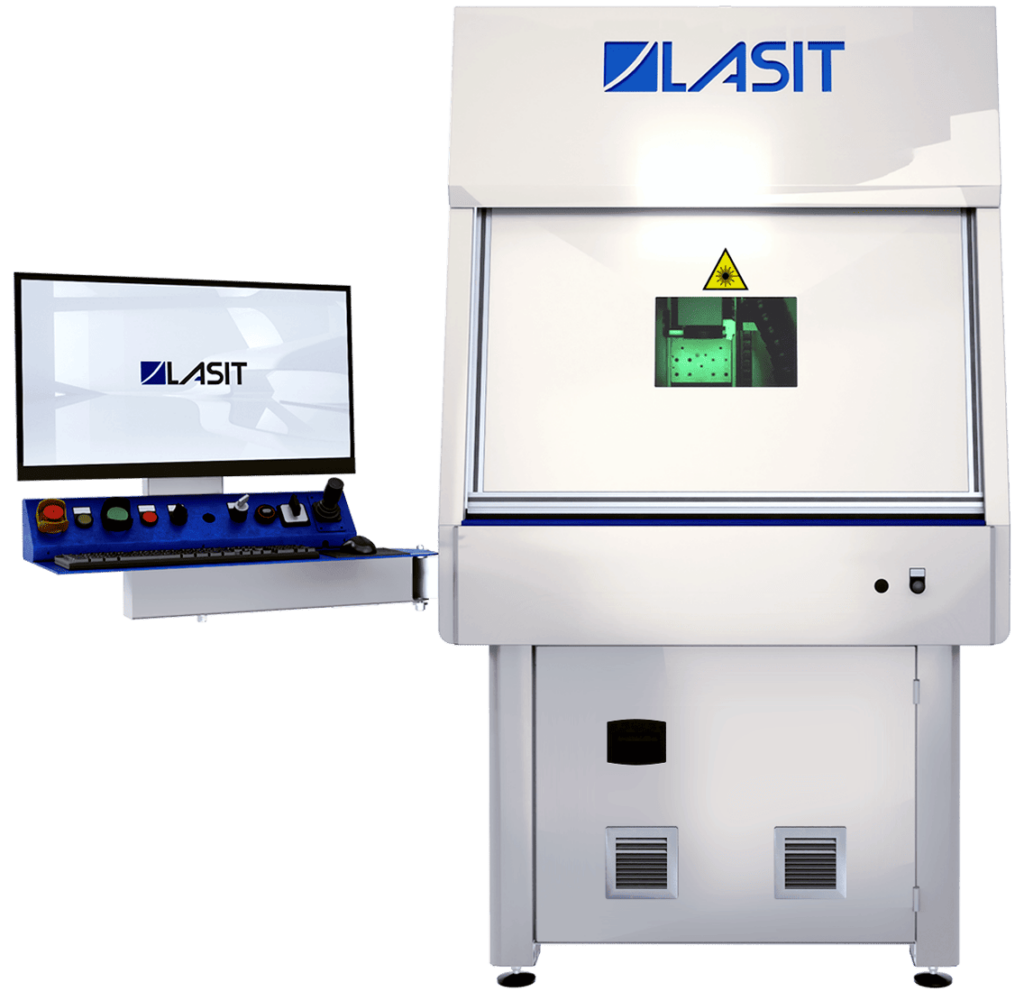
LASIT – Laser Marking Machine Applications
Automotive Industry
- Laser marking of brake discs
- Data Matrix codes for traceability of metal and plastic components
- Laser marking of Tesa tapes in continuous production
- Traceability in electric vehicles: battery cells, busbars and stators
- Laser cleaning before welding
- Laser cleaning and texturing for bonding and welding preparation
- Laser removal of injection gates from plastic components
- Laser removal of injection gates from automotive lights
- Marking of hot parts up to 600°C
Aerospace Industry
- UID/Data Matrix marking according to MIL-STD-130
- Marks resistant to temperature cycles, vibration and corrosion
- Marking of CFRP composites
- High-speed marking for series production
- Machine vision integration
- Replacement of dot-peen marking with laser marking
- Deep laser engraving of critical components
Electronics
- Marking of PCBs, connectors and small components
- Laser marking of plastics
- UV and green lasers for engineering plastics
- Component traceability instead of pad printing and inkjet printing
- Surface preparation for bonding
Foundries
- Marking of cast parts
- Marking of hot parts up to 600°C
- Marking of sand molds
- Deep metal engraving
- Replacement of dot-peen marking
- Systems for machine shops
Home Appliances
- Data plates, logos and scales
- Marking of control knobs
- UV marking of food-contact components
- Marking of PMMA displays
- Picosecond marking of premium appliances
- Customized 3D systems
- Laboratory validation of markings
Innovation
- Laser surface treatment of steel
- Aluminum marking
- Railway traceability
- Replacement of inkjet printing with laser marking
- Laser maintenance protocols
- 360° marking of dental burs
- 3D and Prescan heads
Medical Industry
- UDI marking of surgical instruments
- UDI marking of metals and stainless steel
- Marking of titanium implants
- Catheter marking
- Laser texturing of implants
- Surface preparation of medical devices
Defense Industry
- Marking of ammunition
- Marking of barrels and weapon components
- Deep engraving of critical components
- OCR reading of markings
- UID traceability throughout the lifecycle
Fashion Industry
- Engraving of buckles, buttons and zippers
- Decorations on bags and footwear
- Marking of eyeglass frames and lenses
- Marking of luxury watch components
Hydraulics
- 3D marking of valves and pumps
- Rotomark systems
- Automatic nameplate marking
- MES/ERP integration
- Marking of fittings and cylinders
Promotional Products
- UV marking of glass
- Glass engraving
- Marking of ceramic mugs
- Pens, keychains and gadgets
- Bottle and ceramic processing with MOPA lasers
- Marking of wood, plastic and glass
- Personalization with logos
Faucets and Fittings
- Marking of codes and logos
- 3D marking of complex surfaces
- In-line marking
- TowerMark systems
- Fiber laser marking of brass and steel
Tools
- Marking of milling cutters, inserts and drills
- Automated marking of large production batches
- Marking of press brake tools
- TowerMark for cutting tools
- Laser rust removal
- Marking systems for machine shops